If you are trying to understand how does SMS API work, the short answer is that it lets your software send and receive text messages through a provider instead of doing everything by hand.
That means your app, store, CRM, or support platform can trigger fast, automated SMS messages for verification codes, shipping alerts, reminders, promotions, and customer replies. Once you understand the flow, you can make better decisions about providers, automation, compliance, and the kind of messaging experience you want to deliver.
What An SMS API Actually Does
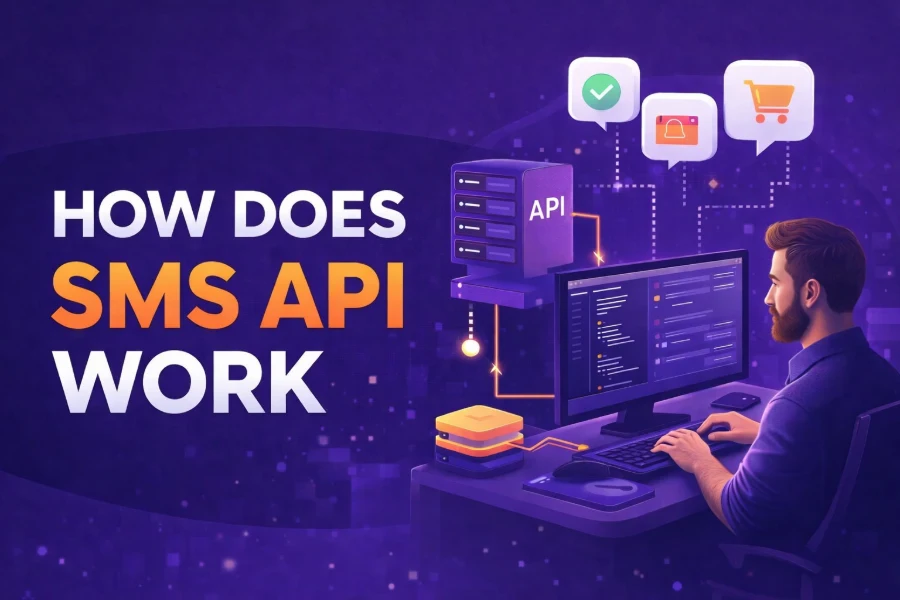
An SMS API is a connection layer that lets your website, app, or internal software communicate with a messaging provider through code, so you can send or receive SMS without logging into a dashboard every time. In simple terms, your system creates a request, the provider processes it, and the message is routed through carrier networks until it reaches the recipient’s phone.
This is why many teams also use SMS automation to help grow ecommerce revenue when they want to connect messaging to revenue-focused workflows. This matters because the API turns texting into an automated business function rather than a manual task, helping you send faster, personalize more accurately, and build repeatable workflows across marketing, support, and operations.
How The SMS API Request Starts
Every SMS message begins with a request from your software to the API, which usually includes the phone number, message content, sender information, and sometimes extra settings such as scheduling, tags, or callback URLs. When a customer places an order, signs in, books an appointment, or abandons a cart, your system can trigger the API call instantly based on the event you defined in your workflow. This first step is important because the quality of your data, message timing, and trigger logic often decides whether the SMS feels helpful, relevant, and well-timed or random, delayed, and easy to ignore.
What Happens After You Send The Request
Once the API receives your request, the provider validates the payload, checks your account balance or permissions, applies any formatting rules, and determines the best delivery route. Teams that care about clean automation often compare structured tools with content systems, such as the 12 best AI content generators, because both depend on reliable inputs, clear templates, and predictable output at scale. After validation, the provider forwards the message through an SMS gateway to the correct carrier network, which serves as the bridge that carries your internet-based request into the mobile telecom world.
Why SMS Gateways Matter So Much
An SMS gateway is the infrastructure that helps your message travel from an online application into a mobile carrier environment; without that bridge, your software cannot reach a phone via standard SMS channels.
The reason gateway quality matters is simple: a strong provider can improve routing, handle scale, reduce delays, and support delivery across many regions, while a weak one can create bottlenecks and failed sends. If you think about workflow design in broader systems, topics like the 15 uses of content generator tools and why you need them illustrate the same principle: useful automation depends on dependable infrastructure working behind the scenes.
How Delivery Status And Responses Work
A good SMS API does more than just push a message out; it also sends status updates back to your system so you can see whether the message was queued, sent, delivered, failed, or rejected. That feedback loop is valuable because it helps you build reporting, retry logic, customer timelines, and support workflows that reflect what actually happened rather than what you hoped would happen.
Understanding how users interact with messages can also improve communication strategies. Tools like Viiewerr can help businesses analyze digital interactions and gain better insights into customer engagement patterns.
Some APIs also support inbound messaging, which means customers can reply to your texts, and your system can automatically process their responses for support, surveys, confirmations, or lead handling.
Common Business Uses For SMS APIs
Businesses use SMS APIs to send transactional messages, such as one-time passwords, account alerts, shipping updates, appointment reminders, booking confirmations, and payment notifications.
They also use them for marketing tasks like promotional campaigns, flash-sale alerts, product launches, win-back messages, and segmented offers that reach customers quickly on devices they already check throughout the day. Internal teams benefit too, because SMS APIs can send outage notifications, fraud alerts, missed-call follow-ups, staff reminders, and escalation messages when speed matters more than long-form communication.
How Personalization Works In SMS Automation
Personalization happens when your system passes customer data into the message template, so the API can deliver texts that include a first name, appointment time, order number, delivery window, loyalty status, or other useful details.
This makes the message feel more relevant and often improves response quality, because people are more likely to engage with SMS that reflects their actual actions or needs rather than generic copy. Tools like Vieworaa can help businesses understand digital interactions when improving personalized communication strategies.
Good personalization is not about sounding clever; it is about using accurate data, timing messages well, and making the text immediately useful to the person receiving it.
How Does SMS API Work With Marketing Campaigns
In marketing, an API connects your customer database, ecommerce platform, or CRM to message triggers and campaign logic, so you can send texts based on behavior rather than blasting the same message to everyone.
You can segment by purchase history, browsing activity, cart value, geography, lifecycle stage, or engagement level, making your campaigns more targeted and less annoying. The best marketing setups also include quiet-hour controls, frequency limits, opt-out handling, and reporting dashboards, because high-performance SMS marketing depends on restraint and timing as much as copy.
Security And Compliance You Cannot Ignore
If you want to use SMS responsibly, you need opt-in consent, clear brand identification, lawful message practices, and a simple way for users to stop receiving texts. That is especially important in the United States, where messaging rules can expose businesses to complaints, wasted spend, and legal risk when consent and message purpose are handled poorly.
A reliable SMS API provider provides compliance features, but the ultimate responsibility still rests with you, because your workflows, contact collection methods, and campaign rules determine whether the system is used correctly.
How To Choose The Right SMS API Provider
The right provider should offer solid deliverability, stable documentation, strong support, useful analytics, easy integration, dependable uptime, and coverage in the regions you care about most. You should also look at webhook support, pricing transparency, template handling, sender options, inbound messaging, security controls, and how well the API works with the platforms you already use.
If you plan to send high-volume or business-critical messages, test the provider in real-world scenarios first, because the best-looking dashboard means very little if routing, reporting, or support become unreliable as traffic rises.
Mistakes That Make SMS API Projects Fail
One common mistake is treating SMS as a one-button feature rather than a workflow system, leading to weak trigger logic, poor segmentation, sloppy templates, and poor timing. Another mistake is focusing only on send volume instead of delivery quality, opt-in quality, and the real customer experience after the text arrives on the phone.
Projects also fail when teams skip testing, ignore response handling, or forget that short messages still need strong copy, accurate data, and a clear reason for being sent in the first place.
Best Practices For Better SMS Performance
Start with clear goals, because an SMS API works best when every message has a purpose such as confirming an action, reducing missed appointments, recovering carts, or improving response speed. Keep the copy short, identify your brand clearly, send at sensible times, and make the next step obvious, whether that means replying, clicking, confirming, or simply staying informed.
You should also monitor delivery reports, test message variants, review opt-out trends, and refine segments regularly, because SMS performance improves when you treat it as an ongoing system rather than a set-and-forget tool.
Conclusion
So, how does SMS API work in practical terms for your business? Your software sends a request, the API provider processes it, the gateway routes it into carrier networks, and your system receives status updates that help you track delivery, responses, and automation outcomes. Once you understand that flow, you can use SMS more intelligently for security, support, operations, and marketing without turning every message into a manual task.
The real advantage is not just speed, but control, because an SMS API gives you a reliable way to connect real customer actions with timely, relevant communication. When you combine good infrastructure, careful compliance, smart segmentation, and useful copy, SMS becomes more than a texting feature. It becomes a direct, measurable part of your customer experience.